


Effective Corporate Philanthropy in a Disrupted Aid Landscape
03 Mar 2026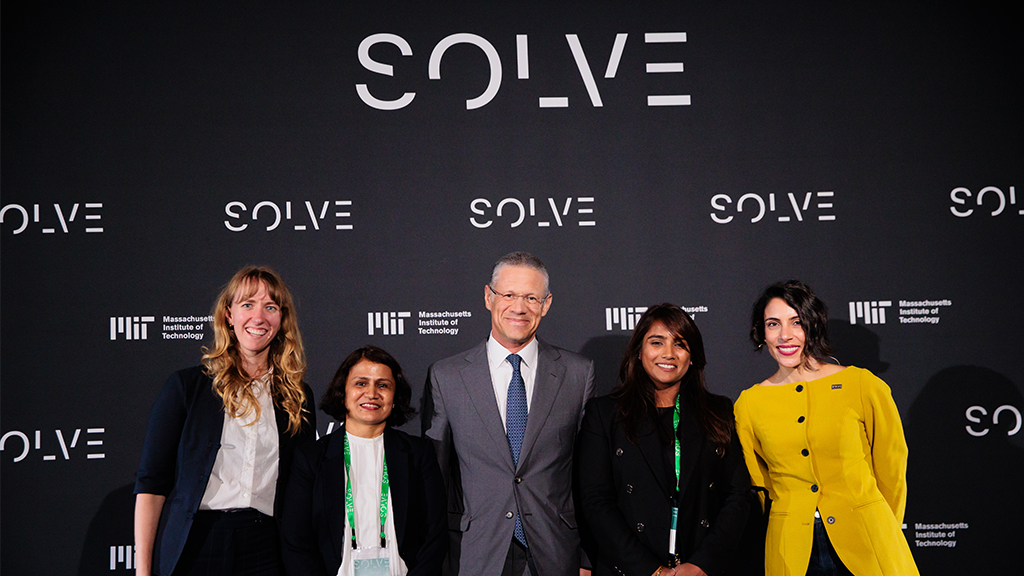
At Crescent Enterprises, corporate citizenship is built around community-level outcomes delivered through structured, long-term partnerships with organisations operating at grassroots level
In today’s more volatile aid environment, corporate philanthropy is being asked to do more than fill gaps. It must help strengthen the systems and partnerships that enable communities to sustain progress when conditions shift. That is a higher bar than visibility, volume, or one-off giving. It demands focus, discipline, and a clear theory of change.
The wider context is tightening. Public development financing is under pressure, with major donors signalling constrained budgets and more selective support. In this environment, the corporate imperative is to stay strategically anchored: to ensure corporate citizenship remains durable, measurable, and aligned with national priorities, delivering outcomes that endure beyond individual initiatives.
At Crescent Enterprises (CE), corporate citizenship is built around community-level outcomes delivered through structured, long-term partnerships with organisations operating at grassroots level across defined focus areas aligned with CE’s competencies and local priorities. In 2024, CE’s corporate citizenship activities benefited 50,188 community members. In a mature national ecosystem such as the UAE, where institutional capacity is strong and expectations for measurable outcomes are high, social investment must demonstrate clear additionality, alignment, and sustained value.
CE’s approach treats corporate philanthropy as an operating model, not a sequence of donations. It uses governance discipline to make deliberate trade-offs, and applies proportionate measurement so that learning improves delivery, not just reporting. This approach has also been nationally recognised, including through the Majra Platinum Impact Seal (2022).
“Effective corporate citizenship is about designing impact that lasts: aligning with national priorities, backing credible delivery partners, and applying measurement that strengthens implementation, not just reporting. When partnerships are built with that discipline, social investment becomes more durable, scalable, and accountable.” Ola Al Haj Hussin, Corporate Citizenship manager, Crescent Enterprises.
Below are five practical dimensions that act as safeguards, enabling corporate philanthropy to translate into durable value within the national ecosystem.
The five dimensions of effective corporate philanthropy
-
Leadership and strategic intent
Durable impact starts with a coherent impact thesis and leadership willing to make trade-offs. This includes declining attractive opportunities that do not align to the thesis, and stewarding partnerships long enough for outcomes to take root.
In practice, this looks like:- A clear set of thematic priorities and boundaries.
- A consistent approach to prioritising opportunities in line with the corporate’s strategic priorities.
- Partnership stewardship over time, rather than rotating across disconnected initiatives.
-
Ecosystem and policy alignment
Interventions are more sustainable when they reinforce, rather than compete with, public priorities and existing ecosystem efforts. In a high-capacity context like the UAE, alignment is not a formality. It is a credibility requirement, and a way to reduce duplication and fragmentation.
In practice, this looks like:- Selecting initiatives that complement existing platforms and national priorities, rather than creating parallel structures.
- Partnering with actors that bring delivery capability and local relevance.
- Designing interventions that can remain viable even as funding conditions or implementation constraints evolve.
-
Community ownership and co-design
Sustainable impact increasingly depends on shared ownership, especially among communities and delivery partners. Those closest to the challenge should have a meaningful stake in defining the problem, shaping the solution, and sustaining results.
Practical implications:- Co-design from the outset, not only at the validation stage.
- Shared decision-making proportionate to risk and responsibility.
- Co-investment arrangements that ensure each partner contributes materially, financially or in kind, and is accountable for delivery.
-
Collaboration over recognition
Multi-stakeholder collaboration typically produces stronger and more scalable outcomes than a single-actor model. Recognition still matters, but durable impact is more likely when branding is managed as a consideration, not the organising principle. Effective collaboration clarifies roles, governance, and accountability, so the coalition performs as a system.
In practice, this looks like:- Shared objectives and defined roles across partners, with clear decision points.
- Agreed governance and reporting rhythms to reduce coordination overhead.
- A communications approach that reflects collective contribution without distorting delivery priorities.
-
Measurement discipline, proportionate to the investment
Credible impact measurement blends quantitative and qualitative approaches and is co-developed with partners, including communities served. It must be rigorous enough to inform decisions and build trust, while remaining practical.
A proportionate measurement approach:- Small programmes: a tight set of outcomes, lightweight qualitative learning, and basic verification.
- Medium programmes: stronger partner reporting, periodic validation, and comparison points where feasible.
- Large programmes: independent evaluation, deeper outcome tracking, and formal learning loops to refine delivery.
A decision tool for leaders: the Five-Part Test
Leaders can use the following as a simple filter for strategy, partnerships, and new opportunities:
- Leadership and thesis: Do we have a clear impact thesis and accountability for results?
- Ecosystem and policy: Are we aligned with government priorities and the wider ecosystem?
- Co-ownership: Are communities and partners involved from the start, with genuine ownership?
- Collaboration: Is the initiative designed to collaborate, rather than to optimise recognition?
- Measurement: Is measurement credible, mixed-method, and proportionate to the investment?
Crescent Enterprises: applying disciplined corporate philanthropy in practice
Crescent Enterprises applies these principles through a structured corporate citizenship approach anchored in long-term thematic priorities, alignment with national and local ecosystems, and partnerships that combine capital, expertise, and delivery capability.
In practice, this discipline shows up in three ways:
- Focused partnership design: CE prioritises long-term partnerships within defined focus areas, rather than dispersing effort across a wide set of unrelated contributions.
- Governance and trade-offs: A clear impact thesis guides prioritisation and trade-off management, ensuring the portfolio remains coherent, aligned, and outcomes-focused.
- Measurement that improves delivery: CE applies proportionate measurement and learning loops with partners so evidence supports decision-making and programme improvement, not simply end-of-cycle reporting.
Short Case Study: MIT Solve and improving access for Arab-region innovators
Access to global innovation platforms remains uneven across the Arab region, particularly for early-stage social entrepreneurs operating in Arabic. Through its partnership with MIT Solve, Crescent Enterprises helped address a practical barrier: limited pathways for MENA-based innovators to engage with Solve’s processes and expectations. Arabic-language clinics were delivered to help entrepreneurs refine applications, strengthen impact articulation, and navigate selection requirements. The clinic drew 95 registrants, a 94% increase compared with the previous year, and 25 unique attendees, more than double the 11 attendees recorded in the prior clinic. These early gains indicate stronger reach and engagement with entrepreneurs in the MENA region.
As traditional support systems weaken, corporate philanthropy can play a more catalytic role, but only if it is treated as a disciplined and deliberate operating model rather than a sequence of donations. The most effective corporate philanthropy aligns with public priorities and ecosystem actors, builds interventions around community ownership and co-investment, executes with discipline, and demonstrates results through credible evidence.
In short, effective corporate philanthropy is not defined by how much is given, but by how well impact is designed, delivered, and sustained.
Source: Khaleej Times