


Resilience now a defining test of startup investability, regional leaders conclude
16 Jun 2026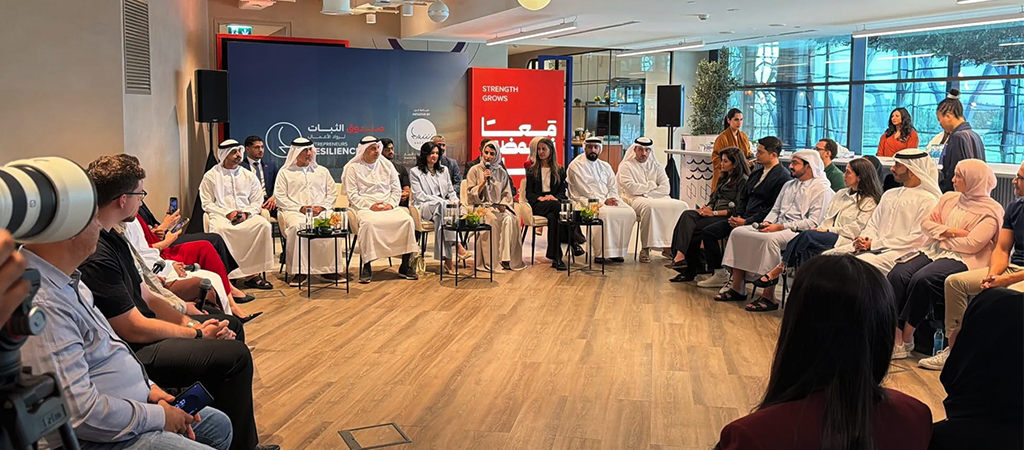
- Sheraa, Pearl Initiative and Crescent Enterprises convene founders, investors, and ecosystem leaders alongside startAD, and ION to examine how startups can withstand volatility and sustain investor confidence
- Ecosystem-led support, including Sheraa’s Entrepreneurs Resilience Fund, highlighted as an important driver of ecosystem resilience
- New crisis resilience framework for regional startups to map the governance standards needed to navigate uncertainty, manage risk, and sustain investor confidence
In a tighter market, the startups most likely to preserve investor confidence are not always those growing fastest, but those governed best. That was the central message from a high-level discussion hosted by Sheraa, Pearl Initiative and Crescent Enterprises where founders, investors, accelerators, and ecosystem leaders examined what makes startups, and the ecosystems around them, truly resilient through periods of volatility.
Themed ‘Governance, Resilience, and Institutional Confidence in Uncertain Markets’, the session was moderated by Rakhil Fernando, Head of CE-Creates (Crescent Enterprises’ venture studio), and brought together Lubna Sohraab, Head of Community at the Sharjah Entrepreneurship Center (Sheraa); Ashwin Joshi, Director at startAD; Sudarshan Pareek, Senior Vice President at CE-Ventures (Crescent Enterprises’ corporate venture capital arm); and Amir Melad, CEO of ION. The event drew active participation from across the region’s investment and entrepreneurship community.
“Periods of uncertainty reveal the real strength of a business,” commented Ralph Choueiri, CEO of Pearl Initiative. “While financial performance matters, it is strong corporate governance that helps organisations make sound decisions, manage risk, and maintain the trust of investors, employees, and other stakeholders. Companies with clear oversight, accountability, and disciplined leadership are better positioned to navigate disruption and emerge stronger. In today’s environment, corporate governance it is a critical driver of resilience, stability, and long-term confidence.”
The event is part of an ongoing collaboration between Pearl Initiative and Crescent Enterprises to make corporate governance a practical, everyday foundation for business across the Gulf, built before it is tested rather than improvised once it is. The session highlighted the governance strengths that are needed in companies under stress, the early warning signs founders and boards should watch for before pressure reaches the balance sheet, and the value of a maturity model that can help founders and investors assess where a company stands before the next downturn.
“The investment community is not looking to avoid risk and uncertainty,” said Sudarshan Pareek, Senior Vice President at CE-Ventures. “We are looking for companies that have built the structures to handle volatility: clear decision rights, real oversight, and founders who treat governance as protection rather than friction In a tighter market, that is what separates the companies we can back with conviction from those we cannot.”
The panel agreed that for investors the question before writing a cheque is no longer only how fast a company is growing, but whether that growth can withstand pressure when the market turns. The first cracks, participants noted, rarely show up in financial statements. They appear earlier, in how decisions are made, how risks are escalated, and whether founders have built the discipline to govern growth before stress exposes its weaknesses.
The conversation reflected a wider market pattern: companies are adopting new technologies and scaling into new opportunities faster than their governance structures can mature. Research cited during the discussion points to a widening gap between the speed of innovation and the oversight needed to sustain it, particularly as artificial intelligence becomes embedded across more business functions. Gartner expects 60% of AI projects to be abandoned through 2026 due to insufficient governance and data quality, while McKinsey reports that fewer than 40% of the largest companies have board-level oversight of AI. The lesson extends beyond technology. Whether a company is accelerating AI deployment or scaling into a downturn, growth that outpaces the systems designed to support it can quickly become a source of fragility rather than strength.
If governance is what a company builds internally, the wider ecosystem is what it can lean on externally. Participants highlighted the importance of constructive investors, accelerators that support founders before small problems become structural, and operators with experience navigating real volatility. Initiatives such as Sheraa’s Entrepreneurs Resilience Fund were discussed as examples of how ecosystem enablers can provide timely support that helps founders maintain momentum, strengthen business continuity, and navigate periods of economic uncertainty. These discussions reinforced the importance of founder-centric support systems that enable businesses to adapt to changing conditions while remaining focused on their long-term ambitions.
Ashwin Joshi, Director at startAD, said: “Governance is usually treated as a post-investment afterthought, something founders only address once an investor forces them to. Times of uncertainty, rightly, push governance and resilience upstream. Building these considerations into your core strategy and product-market fit process from the start isn’t just a strong differentiator, it signals the long-term thinking your stakeholders are looking for.”
Amir Melad, CEO of ION, commented: “Growing a business in technology means adapting constantly to lead change. The governance and execution you build must evolve and stay ready for disruption, prepared in advance and flexible enough to react. That awareness is what lets a business navigate uncertainty and keep innovating to stay ahead.”
The event marks the first step in a larger body of work by Pearl Initiative and Crescent Enterprises. A joint report will follow, translating the discussion into a structured Crisis Resilience Framework for GCC startups. The framework will provide founders, investors, and ecosystem partners with a practical reference for assessing governance maturity, strengthening resilience, and helping companies avoid learning the same lessons only after markets turn.